Why Clutter Builds Up Over Time (And Why It Feels So Heavy)
By Sidney Ayers Young — Owner
May 24, 2026

If you’ve ever looked around your home and thought,
“I don’t even know where to start,”
you’re not alone.
I hear that all the time.
Not because people are incapable. Not because they’re lazy. But because what they’re looking at didn’t happen overnight.
It built slowly. Quietly. Over time.
Article Key Points
1. Why Clutter Builds Up Over Time
Explains how clutter develops gradually through small postponed decisions, busy seasons of life, and emotional attachments rather than laziness or failure. Introduces the emotional weight clutter can carry over time.
2. What It Means When Clutter Builds Up Over Time
Breaks down how clutter accumulates quietly through everyday habits like moving items “for now,” delaying decisions, and carrying belongings from past life chapters into the present.
3. Why Clutter Builds Up So Easily
Explores the real-life reasons clutter grows, including limited mental bandwidth, caregiving, stress, life transitions, and decision fatigue. Helps readers understand the deeper causes behind accumulation.
4. What Happens When Clutter Builds Quietly Over the Years
Describes the emotional and physical impact of long-term clutter, including spaces feeling heavy, rooms becoming unusable, and the guilt or embarrassment many people experience.
5. Why Decluttering Feels So Emotional
Explains the emotional connection between possessions, memories, identity, and different seasons of life. Helps readers understand why letting go can feel difficult and deeply personal.
6. The Better Way to Approach Decluttering
Introduces a compassionate, realistic approach to organizing that focuses on patience, small progress, and meeting yourself where you are instead of using pressure or perfectionism.
7. How to Start When Clutter Feels Overwhelming
Provides practical guidance for beginning the decluttering process in manageable ways by focusing on one small space or task at a time to reduce overwhelm.
8. The Simplest Way to Keep Moving Forward
Covers how sustainable progress happens through consistency, manageable steps, and removing the pressure to finish everything at once. Encourages readers to focus on momentum instead of perfection.
9. Start Here: A Simple Decluttering Plan
Offers a step-by-step beginner-friendly action plan readers can immediately follow, including choosing one small area, setting a timer, and making simple decisions without overcommitting.
10. The Takeaway
Summarizes the core message of the article: clutter develops through real life experiences and should be approached gently, patiently, and one decision at a time.
11. Frequently Asked Questions
Answers common questions about why clutter builds up, why decluttering feels difficult, and why clutter is not a sign of laziness. Helps reinforce empathy and understanding for readers.
The Quick Answer
Clutter builds up gradually over time through small, everyday decisions that get postponed.
Things get moved instead of decided on
Life gets busy and organizing gets pushed off
Sentimental items and life transitions add emotional weight
The result:
Your home fills with things that were never fully processed, which makes it feel overwhelming to even begin.

What Does It Mean When Clutter Builds Up Over Time?
Clutter doesn’t usually come from one big moment. It comes from hundreds of small ones.
A drawer gets full, so things move to the next space.
A closet gets crowded, so items get placed in the guest room for now.
Papers get stacked to deal with later.
Life keeps moving. Work. Kids. Loss. Responsibilities.
And organizing yourself becomes something you’ll get to eventually.
Eventually just keeps moving.
Years pass like this. And one day, your home is holding more than just your life now. It’s holding every chapter that came before it.
Why Does Clutter Build Up So Easily?
Clutter builds up because life asks more of you than you have capacity for in the moment.
This isn’t about discipline. It’s about bandwidth.
At some point, everyone reaches a season where:
They’re caring for other people
They’re navigating change or loss
They’re simply trying to keep up with daily life
And decisions get postponed.
Not ignored. Not avoided. Just… delayed.
But every item still holds a question:
Do I keep this?
Do I need this?
Who was I when this belonged to me?
Multiply that by hundreds or thousands of items, and it makes sense why people stop before they start.

What Happens When Clutter Builds Quietly Over the Years?
When clutter builds slowly, it doesn’t always look chaotic. But it feels heavy.
You might notice:
Spaces that feel full but not functional
Rooms you avoid or don’t fully use
Stacks, boxes, or items that don’t have a clear home
A constant feeling of being behind
And often, there’s something deeper underneath it:
Guilt
Embarrassment
The feeling that you “should have done this sooner”
But this didn’t happen all at once. And it didn’t happen because you failed.
Why Does Decluttering Feel So Emotional?
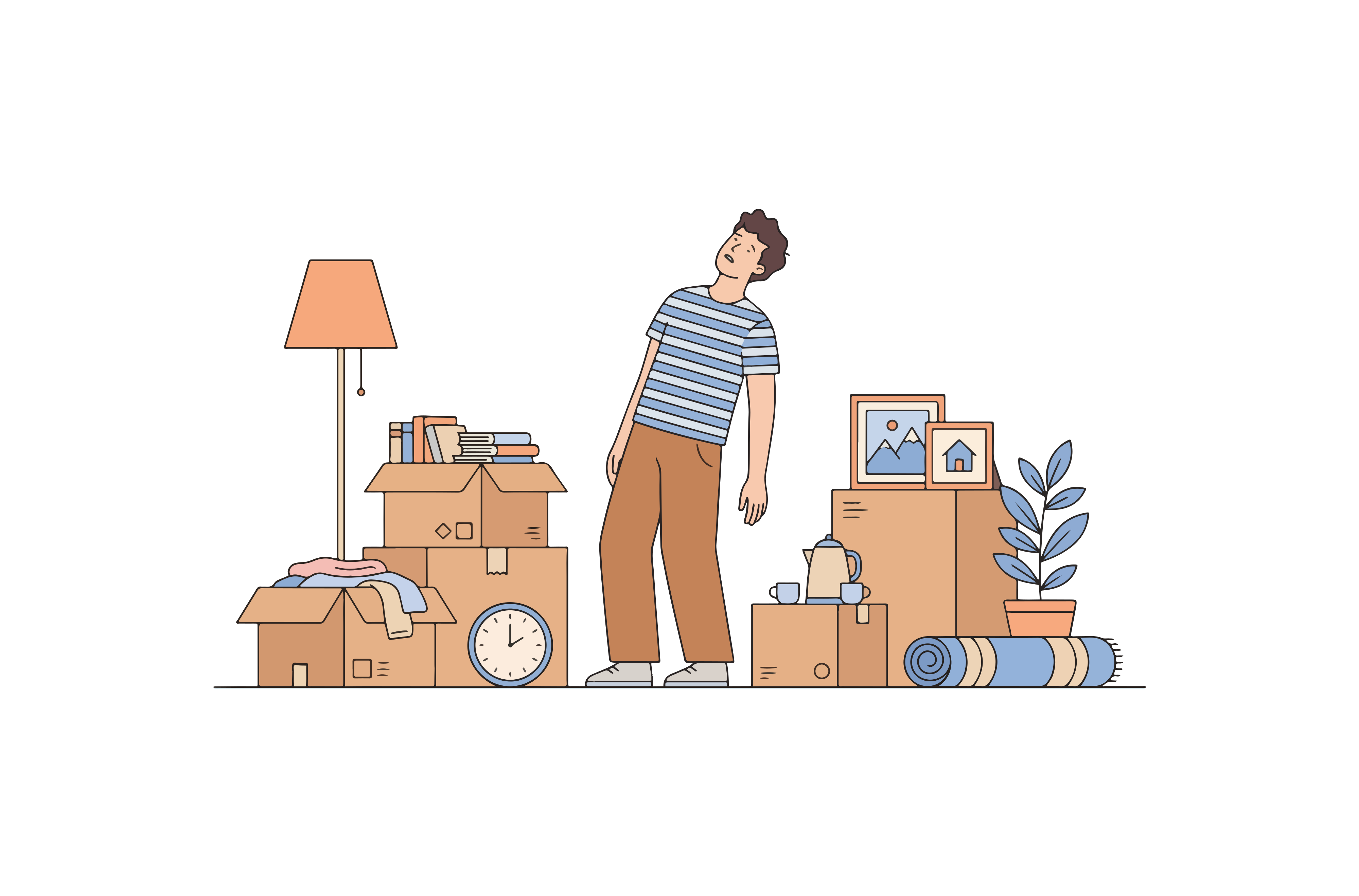
Decluttering feels emotional because it’s not just about things. It’s about time, memory, and identity.
Every item connects to something:
A person
A season of life
A version of yourself
Sometimes it represents something joyful.
Sometimes it represents something you haven’t fully processed yet.
Clutter, most of the time, isn’t about stuff.
It’s about time.
It’s about decisions postponed.
It’s about lives fully lived.
What’s the Better Way to Approach This?
The better way to approach clutter is with compassion and patience, not pressure.
You don’t fix years of accumulation in a day.
And you don’t need to.
What actually works is slowing down and meeting your space where you are right now. Not where you think you should be.

How Do You Start When Clutter Feels Overwhelming?
You start small.
Not everything. Not the whole room. Not the entire house.
Just one thing.
Instead of:
“I need to declutter my home”
Try:
“I’m going to go through one drawer”
“I’ll sort one box”
“I’ll clear one small surface”
One decision at a time.
That’s how momentum begins.
What’s the Simplest Way to Keep Moving Forward?
The simplest way to move forward is to remove the pressure to finish everything.
Progress happens when:
The task feels manageable
You’re not overwhelmed by the outcome
You allow yourself to go at a steady pace
People often tell me after just one session, “I feel lighter.”
Not because everything is gone. But because they’ve started.
And they’re no longer carrying it alone.
Start Here (Simple Plan)
If you’re not sure where to begin, try this:
Choose one drawer, box, or small area
Set a timer for 15 to 20 minutes
Focus only on that space
Make simple keep or let go decisions
Stop when you’re done
You don’t need to do everything.
You just need to start.
The Takeaway
If your home feels heavy, it’s not because you’ve done something wrong.
Clutter builds slowly over time through real life, real responsibilities, and real experiences.
So it makes sense that it needs to be undone the same way.
Slowly. Gently. One decision at a time.
You don’t need more discipline.
You need a starting point that feels manageable.
Frequently Asked Questions
Why does clutter build up over time?
Clutter builds up through small, postponed decisions combined with life changes, responsibilities, and emotional attachments to items.
Why is it so hard to start decluttering?
It’s hard to start because each item requires a decision, and the volume of decisions can feel overwhelming.
Is clutter a sign of laziness?
No. Clutter is usually a sign that life has required more from you than you had capacity for at the time.
If you’ve been carrying this for a while, it makes sense that it feels heavy.
You don’t have to tackle everything at once. Sometimes what helps most is having a simple place to begin and a clear path forward.
If you’d like guidance tailored to your space, I offer a DIY Organizing Roadmap: Get Unstuck. Together, we’ll map out your first steps so you can move forward with clarity instead of second-guessing.
Related Posts

Why People Hire a Professional Organizer: Letting Go of Emotional Items
Organizing isn’t just about creating order in your home, it’s about creating peace in your environment. When it comes to the boxes in the garage or a parent's estate, emotional clutter is always the hardest to sort through. Here is a gentle look at why letting go requires a neutral, supportive presence, and 5 questions to help you navigate sentimental items with dignity and relief.
READ MORE
The #1 Decluttering Mistake (And Why It Makes You Quit Every Time)
If you’ve ever started decluttering only to feel overwhelmed and quit halfway through, you’re not alone. This article explains the #1 decluttering mistake people make, why it causes burnout so quickly, and how breaking projects into small, manageable steps can help you finally make lasting progress.
READ MORE